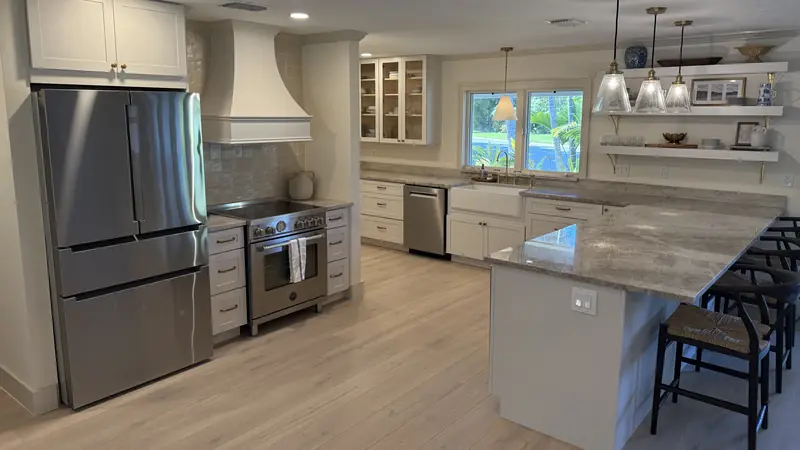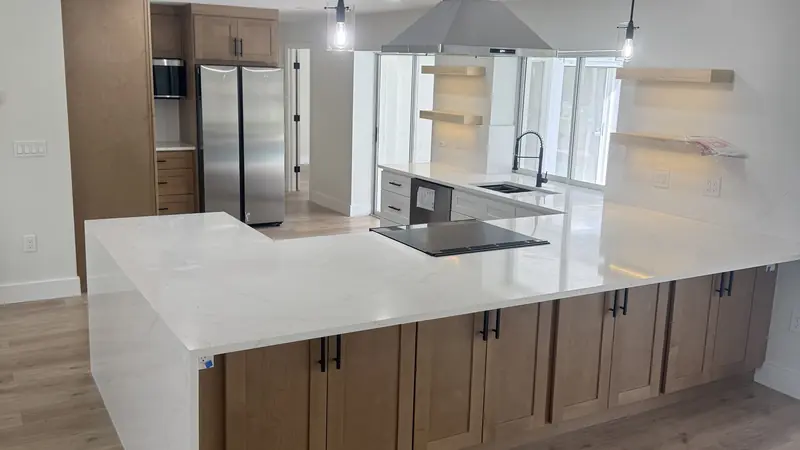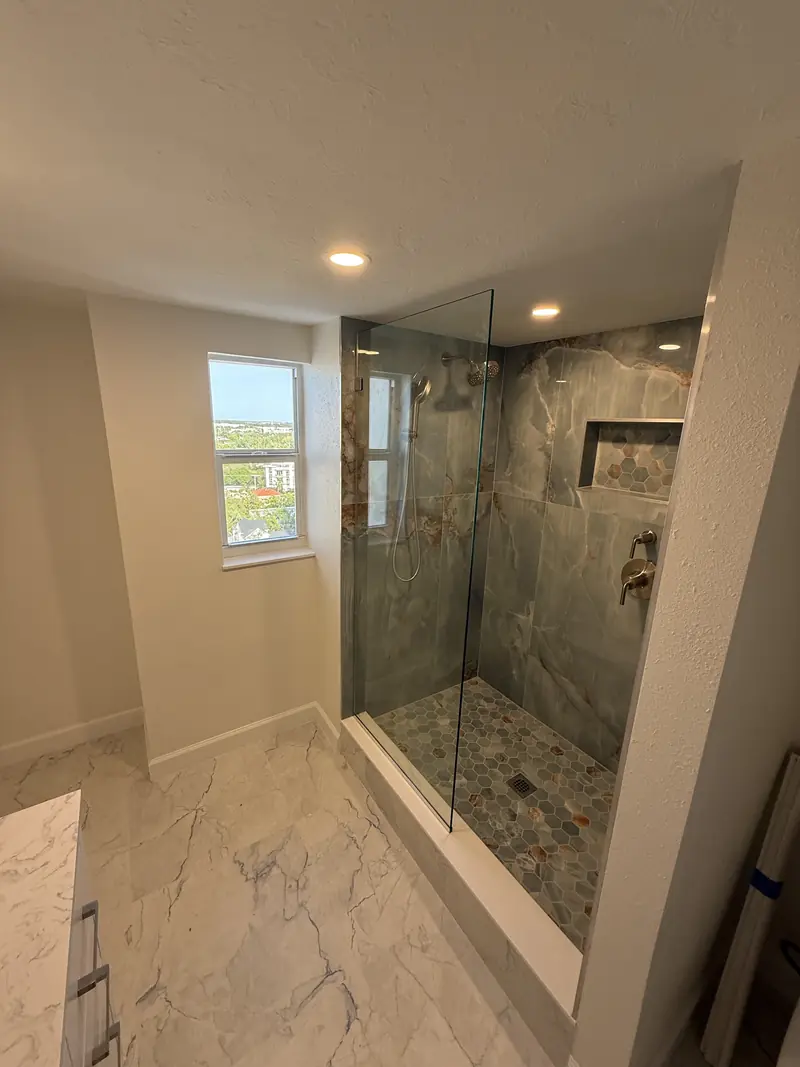

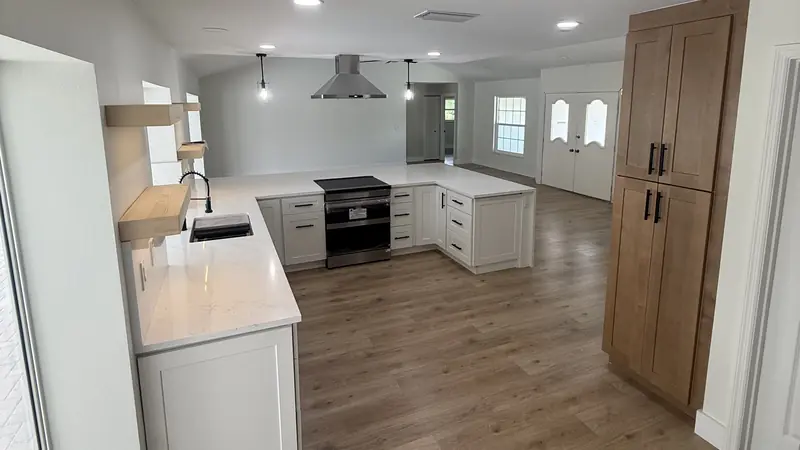
Once work starts on site, a typical kitchen remodel in Tampa takes a few weeks of construction, with planning, selections and permits adding time before demolition. A refresh in the same layout moves fastest; moving walls, plumbing or gas lines adds steps and inspections. Green Home Remodeling, a Florida State Certified General Contractor (CGC1534542), puts a projected timeline in every written proposal; call (813) 536-3976 to plan yours.
No honest contractor can quote one timeline for every kitchen. What we can do is walk you through each phase, show where time is usually spent, and point out what you control.
Key takeaways
- Planning and selections happen before demolition, and finishing them early keeps the job moving.
- Permit review and inspections vary by jurisdiction and scope.
- Cabinets and countertops have lead times that set the pace of the middle of the job.
- Countertops are templated only after cabinets are installed, so that step has a built-in wait.
- One real example: a Tampa client’s kitchen was finished in less than three weeks.
How long does a kitchen remodel take? The phases
Here is the usual order of work on a kitchen remodel. Some phases overlap, and a refresh may skip several of them.
| Phase | What happens | What can stretch it |
|---|---|---|
| 1. Design and measure | Walkthrough, measurements, layout and scope | Changing scope partway |
| 2. Selections | Cabinets, countertops, tile, fixtures, appliances, lighting | Indecision, backordered items |
| 3. Permits | Plans and applications submitted to the building department | Plan review, corrections |
| 4. Demolition | Old cabinets, counters and finishes removed | Surprises behind walls |
| 5. Rough-in | Plumbing, electrical, gas and framing changes | Older wiring or pipes |
| 6. Inspections | Rough-in inspections before walls close | Scheduling, corrections |
| 7. Drywall and prep | Walls closed, patched and prepped | Extent of wall work |
| 8. Cabinets | Cabinets set, leveled and secured | Cabinet delivery |
| 9. Templating and countertops | Fabricator templates, cuts and installs | Slab availability, fabrication queue |
| 10. Finishes | Backsplash, fixtures, appliances, trim, paint, final inspection | Punch list items |
Design and selections
This is the phase you control most. Decide your layout, then choose cabinets, countertop material, sink, faucet, appliances, lighting and backsplash. Appliance dimensions matter because the cabinet design depends on them. Our kitchen remodeling process starts with a walkthrough and measurements so selections fit the space.
Permits
Most kitchen remodels that touch electrical, plumbing, gas or walls need permits. In unincorporated Hillsborough County (Town ‘n’ Country, Westchase, Carrollwood, Citrus Park), the county issues them. Inside Tampa city limits, the City of Tampa does. Pinellas cities like Clearwater, Largo and St. Petersburg each run their own departments. Review times vary by jurisdiction, scope and workload, so confirm current expectations with the building department; we build the expected window into your schedule.
Demolition and rough-in
Demolition is usually quick. Rough-in takes longer when the layout changes or when an older home needs new circuits or replacement plumbing. In many 1960s and 1970s Tampa block homes, this is when galvanized lines or undersized electrical service turn up.
Inspections
Rough-in inspections happen before the walls close, then a final at the end. Each one needs to be scheduled with the department, and a failed item needs a correction and a re-inspection. Good sequencing keeps crews working on other tasks while an inspection is pending.
Cabinet and countertop lead times
Cabinets and countertops set the pace of the middle of the job.
- Cabinets. Stock lines can be available quickly. Semi-custom and custom cabinets are built to order and take longer. Lead times vary by manufacturer and season, so we order as soon as your design is final. See our kitchen cabinets page for the options.
- Countertops. Fabricators template from the installed cabinets, so countertops cannot be cut in advance. After templating there is a fabrication period, then installation. Your material choice and slab availability affect that window. Our countertops page covers common materials.
- Appliances and fixtures. Backorders happen. Having appliances on site before cabinets go in avoids fit problems.
Refresh vs full remodel vs layout change
The scope you choose has more effect on the schedule than anything else.
- Refresh. New countertops, backsplash, hardware, lighting and maybe painted or refaced cabinets, in the same layout. With little or no rough-in work and fewer inspections, this is the shortest path.
- Full remodel in the same footprint. New cabinets, countertops, flooring and appliances, with the sink and range roughly where they are. Expect permits for new circuits and a cabinet lead time before installation.
- Layout change. Moving the sink to an island, relocating the range or gas line, or opening a wall. This adds framing, possibly engineering, more trade work under a slab, more plan review and more inspections. It takes the longest.
If you are on a deadline, such as a holiday gathering or a move-in date, tell us at the first walkthrough. We can often suggest a scope or material choice that fits the window.
Living through a kitchen remodel
Most Tampa homeowners stay in the house while the kitchen is under construction. Set up a small temporary kitchen in a dining room or garage with a microwave, a coffee maker, a toaster oven and a refrigerator. Paper plates and a utility sink or bathroom sink for washing up help more than you would expect. Plan for some noise and dust on demolition days, and keep pets away from open doors when crews are moving materials.
How fast can it go? One real example
Juan Antonio, a Tampa client, wrote in his Google review that his kitchen was completed in less than three weeks. That is one real project, not a promise for every kitchen. It shows what is possible when the scope is clear, selections are made early, and the trades are sequenced well. A kitchen that moves walls, relocates a gas line or waits on custom cabinets will take longer.
In what order should you renovate a house?
If your kitchen is part of a bigger project, order matters. A general sequence for a whole-home remodel:
- Structure and envelope first. Any structural repairs, additions or exterior openings.
- Systems next. Plumbing, electrical and HVAC changes while walls are open.
- Walls and ceilings. Insulation where applicable, drywall, texture.
- Kitchen and bathrooms. Cabinets, counters, tile and fixtures.
- Flooring. Often after the heavy work, so it does not get damaged. Some projects install flooring before cabinets; we plan that per job.
- Paint, trim and final fixtures. The last pass before final inspection.
Doing the kitchen before rewiring the house, for example, often means opening finished walls later.
How to keep your kitchen remodel on schedule
- Finalize every selection before demolition.
- Choose in-stock items where lead time matters more than a specific style.
- Keep changes to a minimum once work starts.
- Clear the kitchen and nearby rooms before day one.
- Keep one decision maker available for quick questions.
- Rely on one point of contact: your project manager coordinates trades, deliveries and inspections.
What you should expect from us
Your written, line-item proposal includes a projected timeline. Green Home Remodeling pulls the permits as the licensed contractor, schedules inspections, and keeps one project manager as your contact. If something changes, like a backordered item or a condition behind a wall, you hear about it right away with options.
Get a free estimate
Want a realistic timeline for your kitchen? Call Green Home Remodeling at (813) 536-3976 or request a free estimate. We will measure, talk through the scope, and give you a written proposal with a projected schedule.
About the author
Written by the Green Home Remodeling team, a Florida Certified General Contractor (CGC1534542) remodeling kitchens, bathrooms and homes across Tampa Bay from our Town 'n' Country office. This guide is general information. Rules and requirements change, so confirm specifics with your building department.