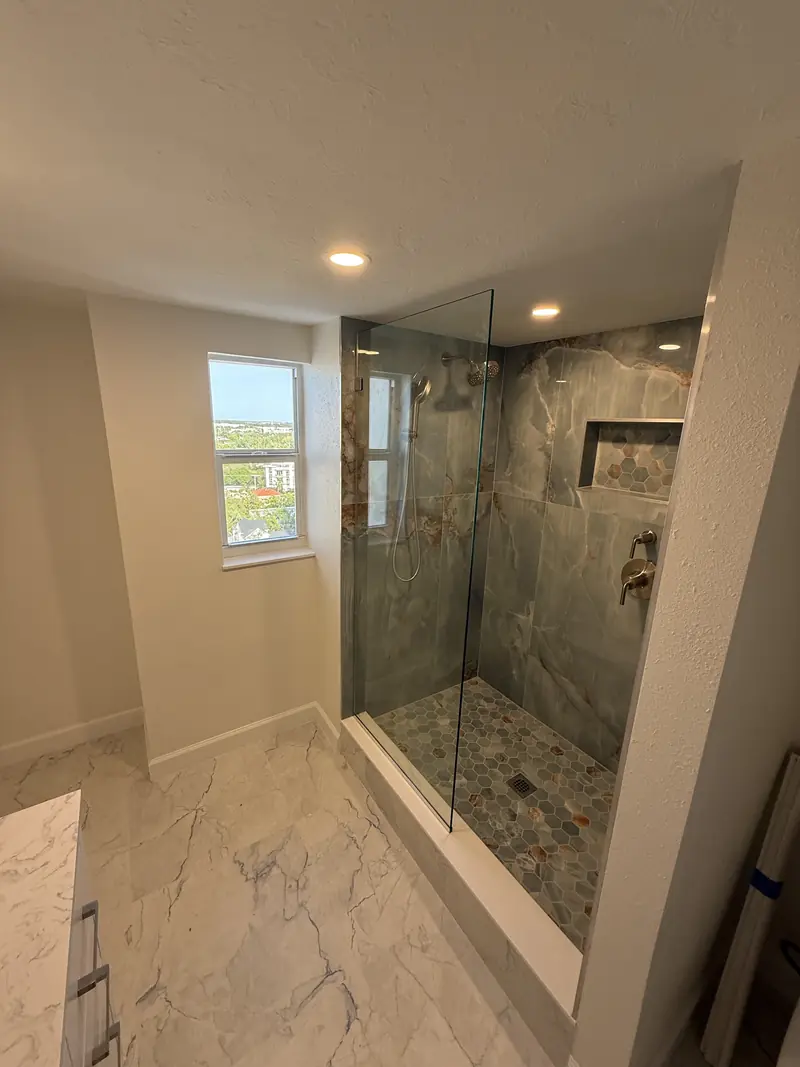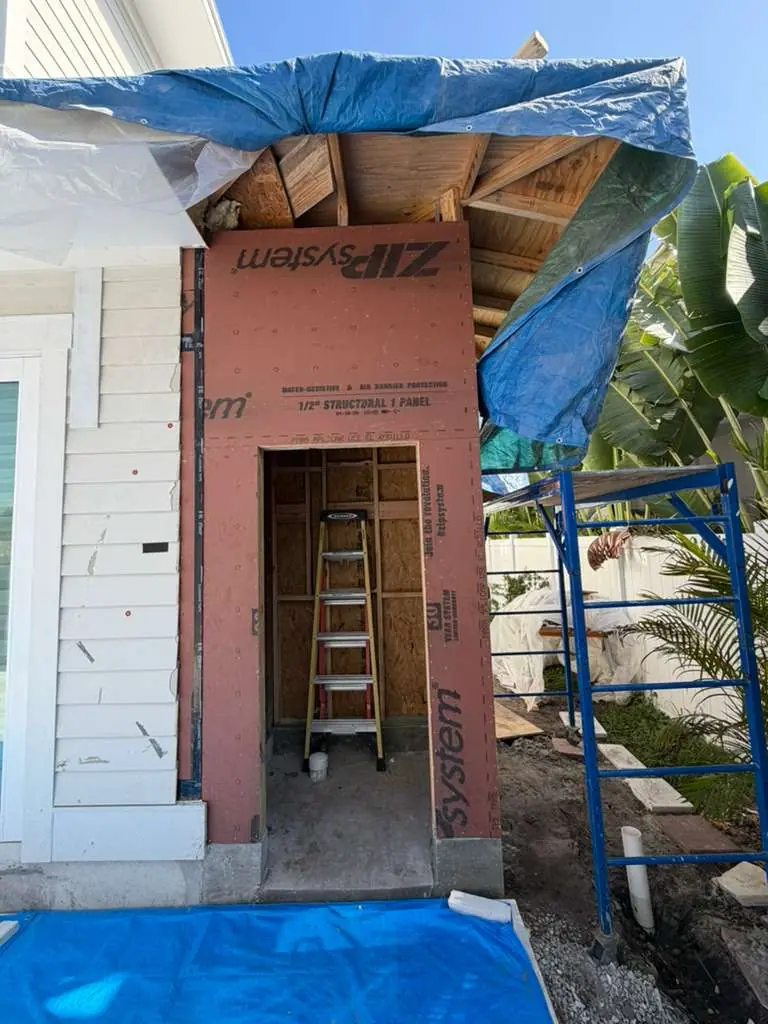

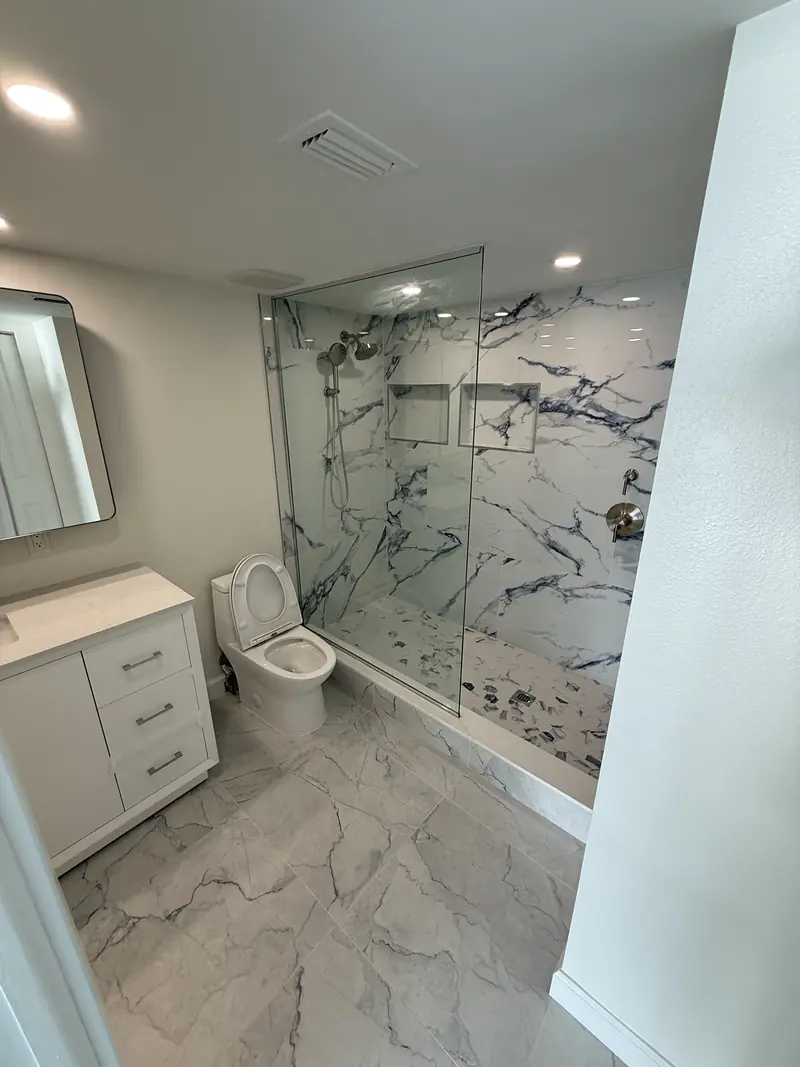
Yes, most bathroom remodels in Hillsborough County need at least one permit, any time the work touches plumbing lines, electrical circuits, walls or structure. Purely cosmetic updates such as paint, a new mirror or swapping a faucet in place often do not. Green Home Remodeling, a Florida State Certified General Contractor (CGC1534542) based in Town ‘n’ Country, pulls and manages these permits for every bathroom we build; call (813) 536-3976 if you are not sure where your project falls.
Permit rules change, and each building department reads them a little differently. Treat this guide as a starting point, then confirm the details for your address with the building department that covers it.
Key takeaways
- Moving or adding plumbing, adding or changing electrical circuits, and moving or removing walls typically require permits.
- Cosmetic work (paint, hardware, mirrors, many like-for-like fixture swaps) usually does not, but confirm locally.
- Unpermitted work can cause problems with insurance claims, home sales and future inspections, and may mean opening finished walls.
- Who issues your permit depends on your address: City of Tampa, Hillsborough County, a Pinellas city, Pinellas County or Pasco County.
- A licensed general contractor pulls the permit in their name and carries the code responsibility.
What bathroom work needs a permit in Florida?
The Florida Building Code applies statewide, and local building departments enforce it. In practice, the trigger is not the room, it is the type of work. A bathroom remodel usually becomes permitted work when it includes any of the following.
Plumbing changes
Relocating a toilet, moving a shower drain, adding a second sink, rerouting supply lines or replacing a water heater are the classic triggers. Plumbing work generally needs a permit and an inspection of the rough-in before the walls and floor are closed. In many older Tampa homes, a remodel also uncovers galvanized or cast iron lines that should be replaced while the walls are open, and that replacement is permitted work too.
Electrical changes
Adding a circuit for a heated floor, a new exhaust fan with its own wiring, recessed lights, or new outlets typically requires an electrical permit. Bathrooms also need properly protected outlets near water, and inspectors look for that during the rough-in and final.
Structural work and walls
Moving or removing a wall, widening a doorway, enlarging a window opening, or changing framing for a bigger shower usually needs a building permit and sometimes drawings. If a wall is load bearing, the scope can include engineering. This is common when two small bathrooms or a bath and closet are combined into one larger primary bath.
What usually does not need a permit
Painting, new towel bars, a new mirror, replacing a vanity top in the same footprint, regrouting tile, or swapping a light fixture on an existing circuit are often treated as cosmetic or minor repair. That said, “often” is doing real work in that sentence. Departments draw the line differently, so call before you assume.
| Type of work | Typical permit status | Inspection usually needed |
|---|---|---|
| Paint, mirrors, hardware | Usually no permit | No |
| Fixture swap in the same location | Often no permit, confirm locally | Sometimes |
| Moving a toilet, sink or shower drain | Plumbing permit | Yes, rough-in and final |
| New circuits, fans, recessed lights | Electrical permit | Yes, rough-in and final |
| Moving or removing a wall | Building permit, maybe drawings | Yes, framing and final |
| Tub-to-shower conversion | Often a plumbing permit, confirm locally | Usually |
Do you need a permit to convert a bathtub to a shower?
In many cases, yes. A tub-to-shower conversion usually changes the drain, the valve and the waterproofing assembly, and inspectors want to see the shower pan or liner before tile goes over it. Some departments treat a straight swap with no drain or valve changes more lightly, but a conversion that relocates the drain, adds a bench, or creates a curbless entry is almost always permitted work.
If you are planning a lower threshold for safety or aging in place, see our walk-in showers and tub-to-shower conversions page for what that work involves.
Is there a new “renovation limit” in Florida?
You may have seen headlines about a dollar limit on small projects that can skip a permit. Florida has recently changed some permit exemptions for small projects, so check current rules with your building department before you skip a permit. Exemptions like these usually come with conditions about the type of work, and they rarely cover plumbing, electrical or structural changes, which is most of what a real bathroom remodel includes. Read the current rules for your jurisdiction rather than relying on a summary.
What happens if you remodel a bathroom without a permit?
Skipping the permit can feel like a shortcut. It tends to cost more later.
- Insurance claims. If a leak or electrical problem traces back to unpermitted work, an insurer may question or limit the claim. Policies vary, so read yours.
- Selling the house. Buyers’ inspectors and appraisers often compare the home to permit records. Unpermitted bathrooms can slow a sale, lower an offer, or require you to permit the work before closing.
- Opening the walls. To permit work after the fact, inspectors may need to see plumbing, wiring and waterproofing that are now behind tile. That can mean removing finished work.
- Fines and stop-work orders. Departments can issue these when unpermitted work is reported or discovered.
- Safety. The rough-in inspection is the one chance an independent inspector has to catch a bad vent, an undersized drain or missing protection near water before it is hidden.
Who issues my permit: City of Tampa, Hillsborough County, Pinellas or Pasco?
Your mailing address can say “Tampa” even when the City of Tampa is not your building department. The jurisdiction depends on whether your home is inside city limits or in unincorporated county land. Here is the general picture, and you should always confirm with the department for your parcel.
Unincorporated Hillsborough County
Town ‘n’ Country, Westchase, Citrus Park, Carrollwood, Brandon and most of Lutz and Odessa generally fall under Hillsborough County building services. Our office on Memorial Highway is in this area, and many of the Westchase and Carrollwood homes we work in are permitted through the county. Some neighborhoods also have HOA review for exterior changes, which is separate from the permit.
City of Tampa
Seminole Heights, South Tampa and New Tampa addresses inside city limits generally go through the City of Tampa’s building department. Parts of Seminole Heights and South Tampa, such as Hyde Park, sit in historic districts where exterior changes may also need historic preservation review. South Tampa also has flood zones near the bay, where the FEMA 50% rule can matter; our guide to the FEMA 50% rule explains that.
Pinellas cities and unincorporated Pinellas
Clearwater, Largo, St. Petersburg and Oldsmar each run their own building departments. Palm Harbor is unincorporated Pinellas County, so permits generally go through Pinellas County. Temple Terrace, on the Hillsborough side, also has its own city department.
Pasco County
Some Lutz and Odessa addresses sit on the Pasco County side of the line. Those homes are generally permitted through Pasco County, even though the mailing address can look identical to a Hillsborough neighbor’s.
Owner-builder permit or a licensed general contractor?
Florida generally allows homeowners to pull an owner-builder permit for work on their own home, with conditions. In broad terms, the owner takes legal responsibility for the work and the code compliance, usually must be the one doing or directly supervising the work, and may face limits on selling or renting the home soon after. Details and disclosure statements vary, so read the requirements your building department publishes.
Hiring a state certified general contractor shifts that responsibility. The contractor pulls the permit in their name, coordinates licensed trades, schedules inspections and answers to the department if something fails. You can verify any Florida contractor license through the Department of Business and Professional Regulation (DBPR) at myfloridalicense.com. Our license is CGC1534542, and our guide to checking a contractor license walks through the lookup.
A quick checklist before you decide
- Does the work move plumbing, add circuits or change walls? If yes, plan on a permit.
- Do you know which building department covers your parcel?
- Is there an HOA or condo association that needs to approve the work too?
- Are you prepared to carry code responsibility yourself under an owner-builder permit?
- Will you be selling the home soon? Clean permit records help.
How we handle permits on a bathroom remodel
On every bathroom remodel, Green Home Remodeling identifies the right building department for your address, pulls the permits as the licensed contractor, and schedules each inspection at the right stage. Your proposal is written and line-item, and it includes a projected timeline that accounts for the permit and inspection steps. One project manager is your point of contact from the first walkthrough to the final inspection.
Get a free estimate
If you are planning a bathroom remodel anywhere from Town ‘n’ Country to St. Petersburg and want a clear answer on permits for your address, call Green Home Remodeling at (813) 536-3976 or request a free estimate. We will walk the space, explain what needs a permit and why, and give you a written proposal you can compare.
About the author
Written by the Green Home Remodeling team, a Florida Certified General Contractor (CGC1534542) remodeling kitchens, bathrooms and homes across Tampa Bay from our Town 'n' Country office. This guide is general information. Rules and requirements change, so confirm specifics with your building department.